Course 10: Cooperation or Confrontation?: EU/China Economic Relations in 2026
Since 2019, the European Union (EU) officially defines China as a multifaceted partner, economic competitor, and systemic rival. In 2025, it reaffirmed this assessment of its relationship with China, putting more emphasis on the rivalry. There is much, both in terms of politics and economics, that divides, and gives rise to tension between, the EU and China.
In recent years, the EU has therefore pursued a policy of ‘de-risking’ its economic dependencies on China. However, in times in which the United States (US), the EU’s former closest ally, forces, through extortion and coercion, the EU to agree to a most unfavourable new trade relation and threatens to annex territory of one of its Member States, the EU may need to reassess its relationship with China. The US is intent on redesigning the international order in its own narrow national interest and has turned its back on international cooperation and the rule of law in international relations. Both the EU and China, on the contrary, still profess their adherence to a rules-based international order and peaceful, mutually beneficial international relations. While this would be most desirable, it is unclear whether the EU and China can be partners in, and global leaders of, an effort to preserve a rules-based international order. What is clear, however, is that for such partnership to be possible, and global leadership to be credible, the EU and China must overcome, or at least mitigate, current disagreements, in particular disagreements on economic issues.
The intensive, four-day course on Cooperation or Confrontation?: EU/China Economic Relations in 2026, explores the potential for closer cooperation and the danger of increased confrontation in their bilateral economic relations and the impact thereof on the rest of the world. The course addresses the political and economic drivers of the EU/China economic relations; the rise of unilateralism, ´securization´ and extraterritorial reach of the trade and investment policies of the European Union and China; the impact of China’s political economy model on EU-China relations; non-discrimination and market access issues in EU and Chinese economic relations; the EU’s de-risking policy; IPR protection and enforcement by China; and the engagement of the EU and China in the WTO. Particular attention goes to EU/China trade in critical minerals, advanced technological goods and related services; the EU’s use of trade defence measures against Chinese ‘fair’ and ‘unfair’ trade; in- and outbound investment by EU and Chinese companies; digital trade between the EU and China and efforts towards convergence of digital regulation, including regulation on artificial intelligence; the instruments and key drivers of industrial policy of the EU and China; and the reform of international rules on industrial subsidies. The course will conclude with a round table discussion with former senior EU and Chinese officials.
Download Syllabus
ECTS: 3
20 Jul 2026 -
24 Jul 2026
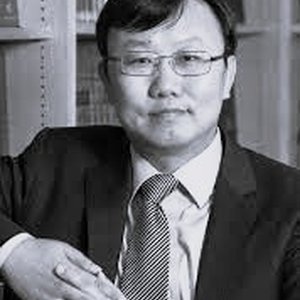
Du
Ming

Peter L.H.
Van den Bossche
In the following programs: WTI Academy 2025/26