Development Economics and Environmental Sustainability
22 Feb 2026 - 26 Feb 2026
Lecturers: Jesús Crespo Cuaresma, Doris Oberdabernig


Applications for the MILE program are considered on a rolling basis. As places are limited, early application is strongly encouraged to allow sufficient time for the assessment of application materials and, where applicable, visa arrangements.
Applicants must hold an undergraduate degree, preferably in law, economics, political science, international relations or a related field, and demonstrate proficiency in English. Previous experience in international trade or investment is an advantage but is not required.
The Master of International Law, Economics and Politics (MILE), established in 1999, is the flagship program of the World Trade Institute (WTI) and a global leader in graduate education on international trade and investment regulation. Designed for aspiring professionals in law, economics, political science, or international relations, the MILE program equips students with the critical knowledge and skills needed to launch successful careers in international trade, investment, and policy. With its strong connection to WTI’s research and a dynamic global alumni network of over 600 members, MILE offers unparalleled academic and career opportunities.
Get in touch with the World Trade Institute
Please note: Applications are accepted only through our online form. Email submissions cannot be considered.
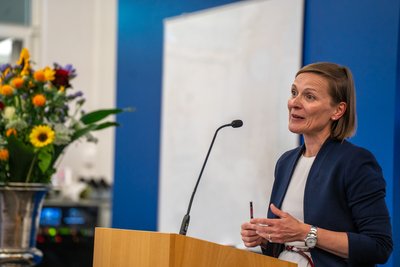
Studying at the WTI offers a unique opportunity to learn from world class lecturers. The interdisciplinary WTI programs prepare students to take a leading role in government, international organisations, private practice and industry, and academia.
Prof. Isabelle Van Damme, Director of Studies
Through rigorous academic training and a practical, interdisciplinary approach, students examine the legal, economic, political, and institutional foundations of international trade and investment. They explore how trade policy is shaped by governments, voters, interest groups, businesses, and other stakeholders, as well as how trade and investment affect issues such as climate change, labor standards, and consumer rights.
The curriculum includes a year-long Introduction to Political Economy course and a new political science course on regionalism. The regionalism course compares integration agreements in Latin America, Asia, Africa, and Europe, examining why these agreements are designed in different ways and assessing their effects.
The 90-ECTS program comprises:
Closely connected to the WTI’s research, the curriculum emphasizes real-world application and prepares students for internships and international careers in international organizations, trade diplomacy, government, business, and civil society through mentoring and professional networking.
We require you to have completed, at least, an undergraduate degree to be considered for admission to the Master of Advanced Studies in International Law and Economics (MILE) program at the WTI.
Courses start mid-September and final exams are scheduled in June.
Tuition for the MILE program is CHF 21,000 for both full and part-time studies. A 2% discount is applied if you pay your entire tuition fee prior to the first day of the program. If full payment upfront is not feasible, a payment plan in installments is available. Please contact us to discuss tailored options.
Regulations governing the program of studies and examinations for the MILE program at the WTI from 22. Maz 2025
This Study Plan applies to all students enrolled in the Master of Advanced Studies (MAS) in International Law, Economics and Politics (MILE) program at the World Trade Institute of the University of Bern. The MILE program is an interdisciplinary MAS, focusing on the law, economics and politics of international trade, investment, and sustainable development.
See more information about the available courses students must choose from in order to fulfill the requirements for the MILE program. In total, the MILE program requires students to obtain 90 ECTS.
Academic schedule for the Fall and Spring semesters.
See details regarding the academic schedules for Fall 2026.
See details regarding the academic schedules for Spring 2027.
The MILE program is taught exclusively in English. Therefore, you need to arrive at the WTI with a level of English. In particular, the level of English needs to allow you to express yourself effectively in and outside the classroom, work on writing assignments and adequately cover weekly readings.
Highlight your academic and professional achievements and explain how the MILE program aligns with your career goals.
Please note that all submitted materials, including essays and letters of motivation, are subject to review using plagiarism detection and AI-assisted analysis tools. This ensures the originality, authenticity, and integrity of your application.
Select one of the three questions to address in an academic essay (maximum 1,000 words) written in English. Your essay should follow a clear deductive structure and include proper citations for any sources you reference.
- Academic essay in English
- Letter of motivation
- Detailed CV
- Transcripts and degrees of all completed college/university courses
- Two letters of recommendation
- Proof of English language requirements
22 Feb 2026 - 26 Feb 2026
Lecturers: Jesús Crespo Cuaresma, Doris Oberdabernig
14 Sep 2026 - 18 Dec 2026
Lecturers: David Baumann, Octavio Fernández-Amador, Kirti Jhunjhunwala



14 Sep 2026 - 18 Dec 2026
Lecturers: Benedikt Pirker, Isabelle Van Damme


14 Sep 2026 - 18 Dec 2026
Lecturer: Kirthana Ganeson

22 Feb 2027 - 4 Jun 2027
Lecturer: Isabelle Van Damme
22 Feb 2027 - 4 Jun 2027
Lecturer: Isabelle Van Damme