
13 Aug 2026
Further Strengthening ILE with Politics
Expanding ILE: Officially Adding Politics to the Program
Politics matters for trade because any trade agreement requires support from domestic constituencies. Such agreements depend on the backing of voters, interest groups, and other stakeholders. Therefore, it is essential to better understand the political dimensions of international trade regulation.
Traditionally, the MILE program has focused on economics and law. While political science has always been part of the curriculum to some extent, we are now expanding the political component of the program. Politics has always played an important role in international trade cooperation, but in recent years its significance has become even more evident.
We recognize that politics is central to the negotiation and implementation of trade and investment agreements. This includes understanding who lobbies for these agreements, which interest groups are influential, and how political processes shape trade policy. At the same time, trade and investment generate important distributional effects that extend beyond economics. Issues such as climate change, labor standards, and consumer rights are not only economic concerns but also fundamentally political ones.
Both the academic literature and our teaching reflect this growing importance of politics. We therefore believe it is essential to prepare our students for careers in international organizations, trade diplomacy, companies, and civil society organizations by providing them with a holistic understanding of trade policy. This means integrating economics, law, and political science. Only through an interdisciplinary approach can we fully understand today's challenges and effectively address them.
This year, in addition to our traditional year-long Introduction to Political Economy course, we are offering a new political science course on regionalism. The course compares different regional integration agreements, examining why they have been designed in particular ways and assessing their effects. We will study regional agreements in Latin America, Asia, Africa, and Europe, enabling students to develop a deeper understanding of preferential trade agreements across different regions.
Further info
Watch the announcement here
Learn more about the MILE and apply here
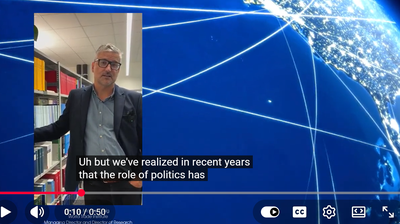
Combining the three disciplines-law, economics, and political science-is quite unique. If I look at offerings across the world in terms of trade policy programs, and so very proud of being sort of a pioneer here in this respect.
— Professor Manfred Elsig, Managing Director and Director of Research